Clark JM Jazz Mandolin
Search
Tips & Tricks Mel Bay Mandolin Sessions
What's New?
07.03.09

We are fascinated by the post-modern chic of the A-model mandolin by UK builder Nigel Forster. Having the fortunate opportunity of apprenticeship with internationally regarded
Read more »

07.01.09

We love feedback. Especially when someone totally out of the blue "gets it." We recently read a comment from a fan weighing in on our
Read more »

06.29.09

Changes in our JazzMando Merchandise Center you should know about, we've recently decided to put more focus on the expanding line of excluseive Labella Flatwound
Read more »


RSS Subscribe to this feed

Spotlight

Sponsors below have truly incredible products you should explore. Click banners and enjoy!

Sage Wisdom

"Good improvisation communicates harmonic progression melodically. Effective melodies manipulate harmonic content through the use of guide tones and preparatory gravity notes, masterfully woven in systematic tension, release, and transparent harmonic definition."


July 03, 2009 | Nigel Forster Interview

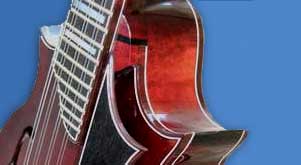
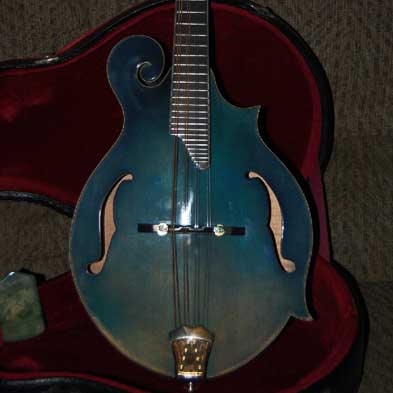
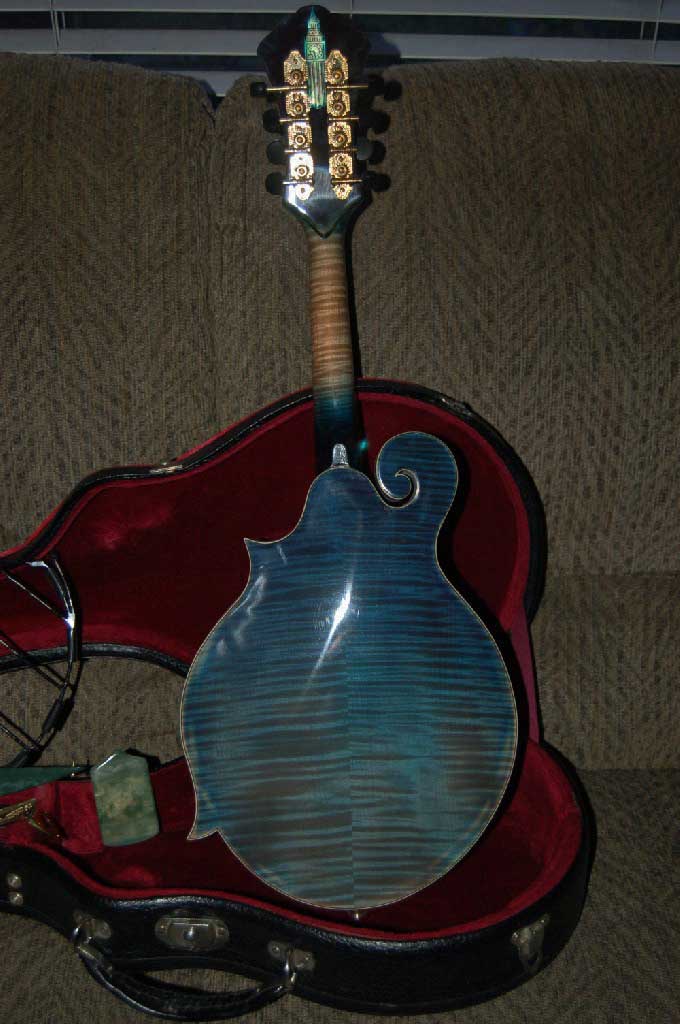
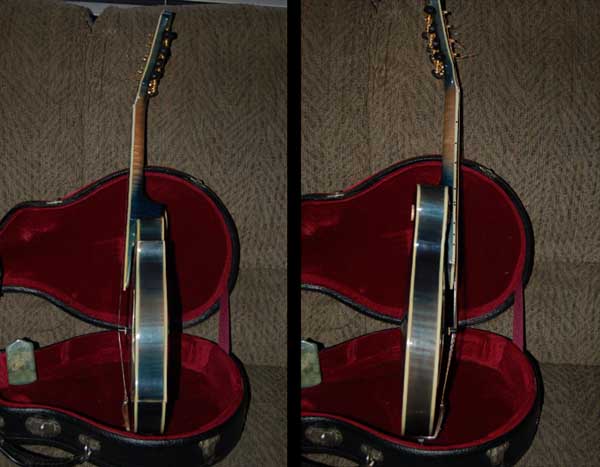
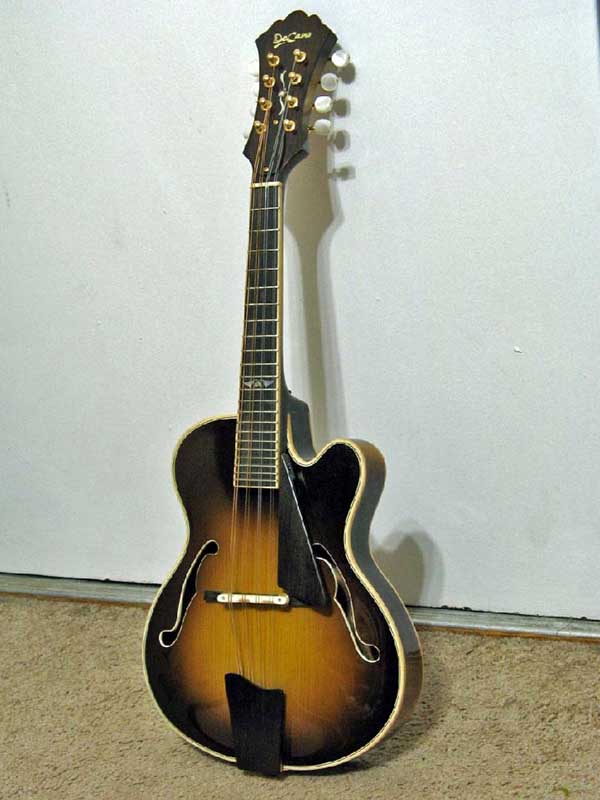
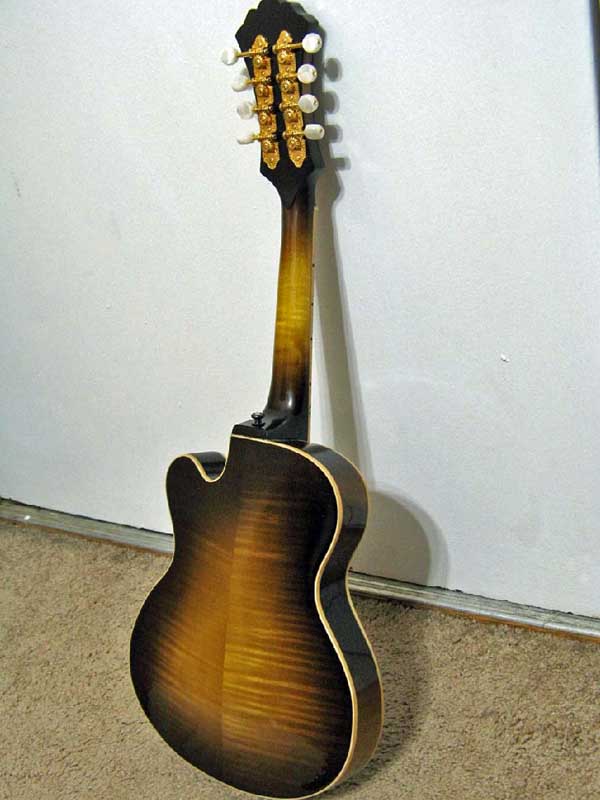
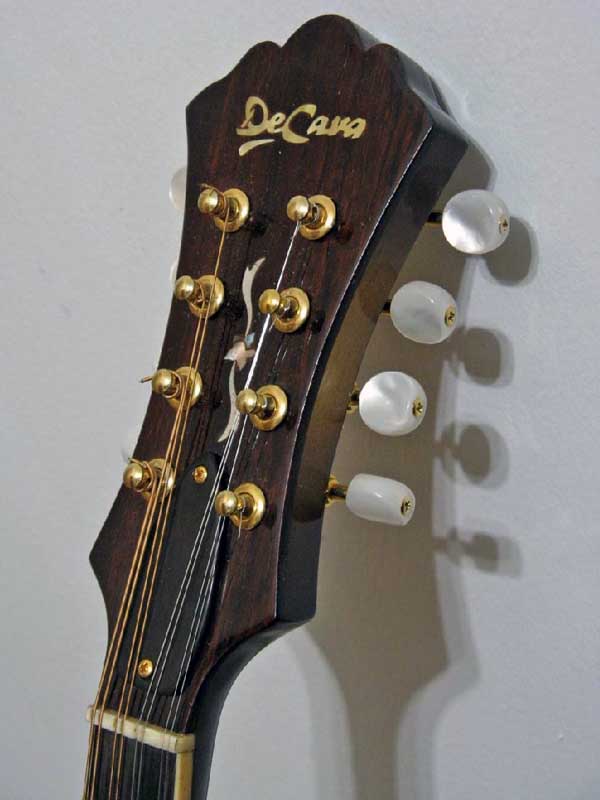
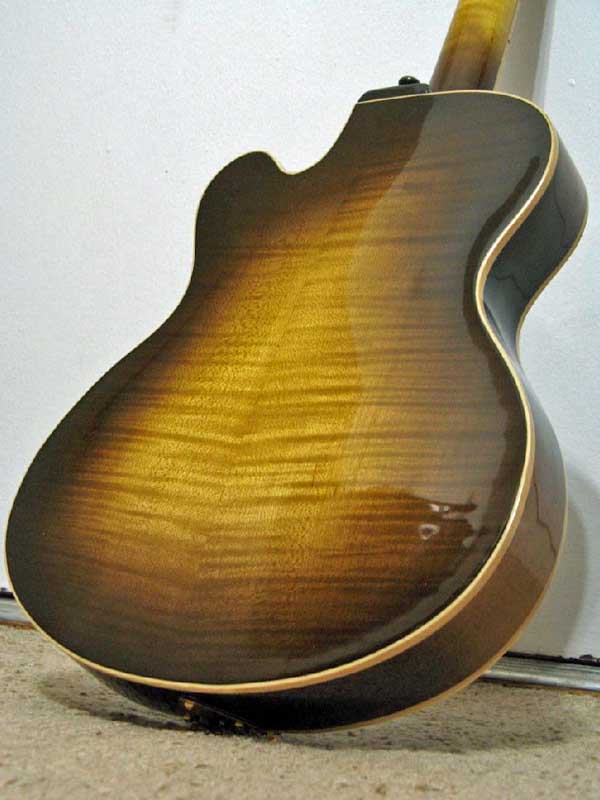
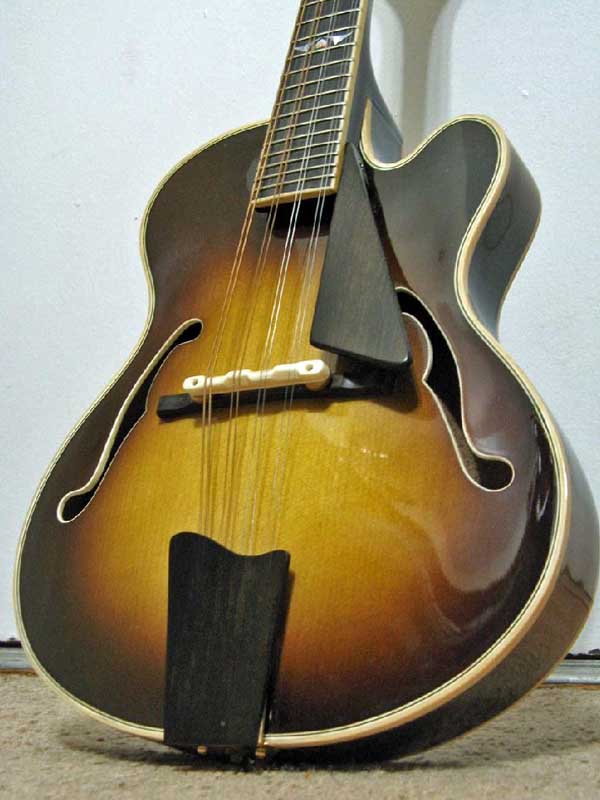
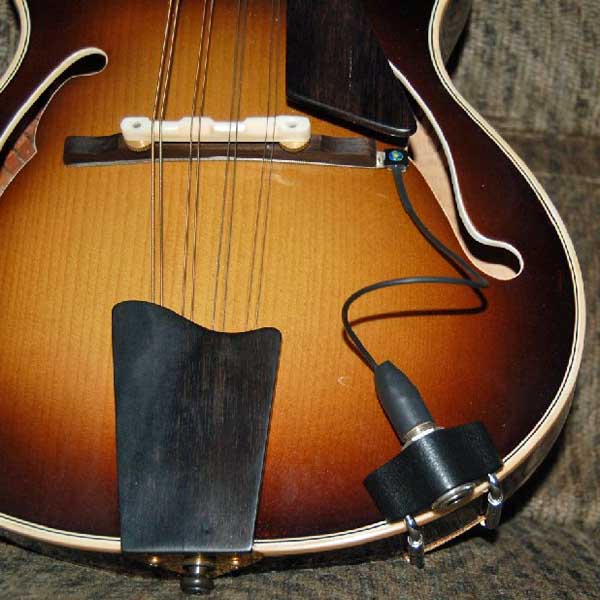
We are fascinated by the post-modern chic of the A-model mandolin by UK builder Nigel Forster. Having the fortunate opportunity of apprenticeship with internationally regarded luthier Stefan Sobell, he worked for Sobell several year until January 1990, then returned two years later where he remained until November 2003. The following year the young builder set up his own shop in Newcastle upon Tyne, where continues building original guitars, bouzuokis, and mandolins of his own signaure design. His notoriety increased, he has a following seeking what he describes as the "Forster sound--the key words power, fullness and playability."

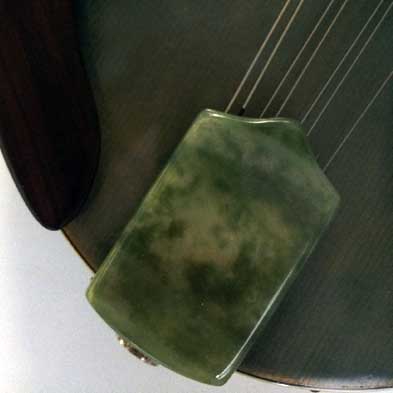
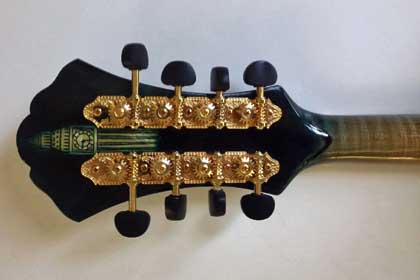
NK Forster5 NK Forster6
Click pictures for close-up

We asked him several questions of his remarkable craft and processes:

JM: How are your mandolins different from the "traditional" instruments in concept and sound? (or how might they be the same?)

NF: There is much in common with a Gibson A model on a superficial level, but as any maker will know the main factors we have at our disposal to colour the sound of our work are the arching of the soundboard and back, the thicknessing of the plates, the position and shape of tone bars, the materials we use and the type of bridge we employ. By working with all of these my instruments have a very different sound to a traditional American instrument, but stay clear of the "tinkly" sound I often associate with European ones.

Let's face it, the best Bluegrass mandolins have already been made, but this cannot be said for the Celtic or Jazz Mandolin. What I was working towards was having the sustain and clarity of an English Mandolin coupled with the dark, woody bottom end of an American one. Many people making Mandolins for Jazz players try to get more sustain this is better achieved with an oval or round hole but because many players prefer the look of F holes makers find themselves sticking with that design as it more commercially acceptable. I prefer both the sound and the look of an oval hole so the decision is an easy one for me to make!

The main influences on these instruments came from three sources - Sobell being the first. It is difficult for me to make an instrument for it not to be influenced by the time spent with him.

The next two sources were a pair of superb Mandolins I played whilst stopping with a friend and customer over in Dallas, Texas. They were a Gilchrist F model and a Montelone Radio Flyer. These were the finest two mandolins I had ever played. Knockout! I had a good look at them and let them simmer for a year or so in a pot on a low heat at the back of my mind along with a Sobell!

NK Forster3 NK Forster4

JM: What distinguishes your mandolins from other contemporary builders? (playability, sound, design, etc.)

NF: I try to look forward with out ignoring the past. I like clean lines clear notes and no fuss. I try to build an instrument that provides the player with a source of inspiration and that offers no obstacle to producing the music in their hearts. It seems to me that a top quality Jazz mandolin and a top quality Celtic Mandolin may well be very similar instruments. People don't like to hear this sort of thing but it may be the case. But many folk want clarity coupled with richness. This is what I do best.

Nigel Forster

JM: What woods are available to you and how does this affect their sound?

NF: I have plenty of stuff available but I tend to be rather conservative in my choice of tone woods and rather more experimental in my methods of design and construction. I use European Spruce for my soundboards and American Maples for the back and ribs. The necks are always from my stock of 1908 vintage Cuban Mahogany. The best of the best! The Spruce I am using now is a very light and stiff batch of Czech Spruce. Some of it is very fine grained, but some really rather coarse, but I really do believe that closeness of grain and quality of tone are quite unrelated. I also have some rather nice Adirondack Spruce and I'll build with this when I have time. It should be interesting to compare.

JM: What goals/projects would you like to work on in the future that you haven't already accomplished?

NF: For the future--to keep working! It would be rather pleasing to see my mandolins played by more people. Those who have played them seem really bowled over and that is always a pleasing reaction. The designs will slowly evolve as they always have. Experimentation is so important to me, once you reach a certain level of skill,woodwork just becomes woodwork so making the same thing over and over would not satisfy me at all. No, the plan is to keep working and keep experimenting with the architecture of instruments.


We always appreciate the builder who is willing to build off of tradition, taking it to the next level, and look forward to how Nigel will impact the mandolin world.

Builder Website: NK Forster Guitars
My Space Page

Posted by Ted at 05:52 AM


July 01, 2009 | Fingers/Ear/Brain

We love feedback. Especially when someone totally out of the blue "gets it."

We recently read a comment from a fan weighing in on our concept of "Fingers/Ears/Brain," outlined in the "Getting Into Jazz Mandolin" book, as well as on this website: "I purchased this book to help me learn to play by ear. I am an admitted tab addict. I have always wondered how people learn to play by ear. Especially in a jam session. The 'Introduction and Philosphy' section of this book caught my attention and the light bulb went off. This book may be geared to Jazz but I believe it can help me learn to play by ear. The path seems simple enough 1) develop your fingers to find the correct notes, 2)develop your ear to hear the notes your fingers play, 3)develop your brain to comprehend the musical style and theory.

I hope that this book helps me develop my ear so that I am comfortable playing at a jam session without tabs. I believe this book is a great method to develop my technique and ear at the same time so I can accomplish my goal. Learning a little jazz will be fun too."

Get your copy today!

Yahtzee! Though the original intent of the book was to introduce the Folk/Bluegrass market to some of the jazz vocabulary, we feel strongly there is more application here than just jazz. The ability to explore chromatic realms will make all of these studies valuable for equipping the mandolinist for classical, pop, and Choro music.

Ah, discovery. Enjoy!

More about this concept: Fingers/Ears/Brain

Posted by Ted at 05:32 AM


June 29, 2009 | Important Thomastik string update

Changes in our JazzMando Merchandise Center you should know about, we've recently decided to put more focus on the expanding line of excluseive Labella Flatwound strings (now available in loop-end mandolin, ball-end electric, mandola, and researching 5-string). No disrespect intended to the Thomastik family of mandolin strings, they are superb, but because of the high cost of inventory, we've made the decision to discontinue selling them on the website. We still have a couple sets of the heavies for any that want a clearance deal, but purchase will have to be handled through our contact feature, as the shopping cart option is no longer available for TIs.

We'll leave the Thomastik page up for those using it as a reference for tension information, but we encourage you to try the more economical JazzMando brand if you haven't already. It can be accessed by typing "Thomastik" in our search feature.

JM Family Strings


Thanks for your understanding.

Posted by Ted at 05:33 AM


June 27, 2009 | Flatwound string project: Mandola/Octave Mandolin

The mandolin world could inarguably use another brand of (loop end) flatwound options for the lower, long scale mandolin instruments like the Octave and Mandola. We actually started partnering a project with D'addario Strings about 18 months ago discussing this, having personally used their existing D'addario Chrome Electric Guitar Set singles (removing the balls) for the studio's OM, and now, a recently acquired 10-string. After some conference calls with the market research team, we suggested on two SKUs to work on. First the set for mandolin (similar to the Labella JM11) with the following gauges:

LE011
LE015
CG024 (loop)
CG036 (loop)

We also highly recommended a compromise collection of loop end flatwounds that would function as both Mandola and Octave mandolin sets. Gauging between these is not all that different among existing mass market offerings.

LE013
CG024 (loop)
CG035 (loop)
CG045 (loop) (possibly CG048)

The company's R&D team is more prone to address high demand for other more broadly popular instruments, but D'addario is committed to the niche spectrums of the fretted, and agrees this is a project worth tackling. We are currently stalled in development, but since the string already exists in a ball-end version, we think the loop-end incarnation would not be far away. As a bonus, the price would be considerably less than current competitive options.

We could use your help lending feedback in support of this project. Please take some time to weigh in at the official D'addario Team Blog. With your voice, we might persuade them to move this up the priority list. Your comments are a direct voice into the ears of the D'addario product development team.

Click into D'addario blogs and let them know you support this notion: D'addario Blogs

Let D'addario know you want flatwound loop end strings!

Posted by Ted at 05:59 AM


June 25, 2009 | Dr. Mao: Four Exercises to Sharpen Your Brain

We've always maintained that learning higher level intellectual concepts such as music theory are initiated best through the drilling of physical motor skills. Playing scale patterns, developing a fingertip tactile awareness is a gateway to grasping (pun intended) the harmonic relationships of notes. We stand vindicated in this by the recent research of health expert Dr. Maoshing Ni (AKA "Dr. Mao") in a published article, "Four Exercises to Sharpen Your Brain." Of special note is #3 "Move your fingers to improve your brain."

From the article: "Why does this work? A map of the brain shows that the nerve endings on your fingertips correspond to more areas of the brain than any other body area, except perhaps the tongue and lips. Therefore, finger exercise and movements can be useful in stimulating the neurons in the brain. The National Institute of Mental Health conducted experiments that showed finger exercises enlarged the capacity of the participants' brains, increased connections between neurons, forged new neural pathways, and increased circulation to the brain areas. The researchers concluded that finger exercise contributed significantly to brain plasticity, the ability of the brain to renew itself. Increased circulation means more oxygen and nutrients for the brain cells and decreased waste products that clog up the brain."

Some professionals bemoan the use of scale drills and arpeggios, citing the development of an overly robotic improvisational sensibility, but we hold they give your thought processes tangibility--something to build higher function thinking concepts. Dr. Mao suggests just the very use of working the fingers stimulates brain neurons.

Read the rest of the article for the other thee ways: Four Exercises to Sharpen Your Brain

Brain.jpg

More thoughts: The JazzMando Brain.

Posted by Ted at 06:01 AM


June 23, 2009 | More opportunities for FFcP support

We mentioned our Facebook support forum "Fretboard Yoga for the Mandolin" last spring, but there is another opportunity for sharing insights to the FFcP System with an engaged group of fans at the MandolinCafe.com Social Groups, "FFcP fans/support. What works for you?" It's a small but active bunch addressing such issues as the mental aspects of FFcP, where to go next, improvising, Pinky finger use, and Major 7th arpeggios. Members exchange their personal experiences and it's a perfect place to ask questions.

All it takes is a Cafe active membership and you can be a part.

Check it out: FFcP fans/support. What works for you?

More about FFcP: FFcP Studies

FFcP.gif

Posted by Ted at 06:01 AM


June 21, 2009 | Inspiring story for Fathers Day

Two special events today in the northern hemisphere, one: Father's Day, and two: Summer Soltice, the longest daylight and optimal opportunity to pick on the porch. These two really should go hand in hand. The capacity to enjoy life, to reflect on what is truly important, family, recreation, and the opportunity to aesthetically express ourselves is something not to be taken for granted.

We came across an interesting story a year ago by Reader's Digest contributor, David Hochman, who chronicles his own journey into fretted self-awareness, learning to play an instrument (a mandolin) as an adult, 30 years after abandoning piano lessons. An excerpt:

"Even more remarkable was how grounding it was to play. Somehow the usual anxieties of life -- money, status, the possibility of a meteorite landing on my head -- didn't matter when every atom of my humanity was focused on mastering the four-fingered D chord. Experts in positive psychology call it flow, the rosy feeling of losing oneself in a challenging activity. One night, while working out the melody of "Over the Rainbow," I was startled to see I'd been picking and grinning nonstop for four hours"

Author David Hochman

This might resonate well with your own experience in fretboard mastery, and worth a reread even if you've already seen it.

Enjoy the rest of the article: The Mandolin Player

Posted by Ted at 06:39 AM


June 19, 2009 | Coolness at the Cafe

Of course we're huge Mandolin Cafe fans here; we just mentioned the terrific free pedagogical resources in our most recent Tips and Tricks article, "They Say the Best Things in Life are Free." We also want to give out a shout to our buddy Scott Tichenor for a recent tweak in his Classified Ads section that allows a quick link from Cafe Ads to Facebook. If you're a Facebook member (if not you should be!), you can "share" your ad by clicking the FB Icon within the ad (single view mode) and it immediately shows up on your Wall for friends to enjoy.

Pretty cool. Thanks, Scott!

More instructions. Here's How.

Join Facebook!

Posted by Ted at 06:10 AM


June 17, 2009 | New JazzMando sponsor: The Music Tree

"Cutting edge tools for the mandolin." It's a great tag for our newest JazzMando sponsor "The Music Tree," a website and retail resource for some very interesting accessories for the mandolinist. Company founder, Teri LaMarco and the Florida based team personally test and endorse all their products, items and services hard to find elsewhere.

The latest buzz has been the new Tonerite, a unique de-damping device that enhances tone and response, shortening the "breaking in" period of a mandolin or guitar. They also offer Blue Microphones (for iPod recording!), Eminence Acoustic/Elec Upright Bass, Fostex, Gypsy Mandolins, G7 Capos, Kerly Strings, Olympus LS-10 Recorder, Sabine tuners, and Scott Sweet Instruments.

Visit the "Music Grows Here" website and take them up on their invitation to "come hang out with us in the Tree and enjoy your musical journey."

The Music Tree.jpg

Website: The Music Tree

Posted by Ted at 05:46 AM


June 15, 2009 | Andrew Mowry Octave Review

As promised, a full and in-depth JazzMando review of an Andrew Mowry Octave Mandolin. The young Pacific Northwest craftsman has once again wowed us, official inside nickname "Wowry Mowry." (We have no doubt he gets that all the time...) The deeply resonant guitar-shapied body is as much a treat to the eye as the ear, and for a longer scale, very easy to play. His "King of Clean" detail reminds us very much of the work of California veteran giant Michael Lewis. Don't ever pass up a chance to play a Mowry instrument!

Andrew Mowry Octave

Read review: "Mowry Guitar-bodied Ocatve Mandolin.

Posted by Ted at 02:22 PM


QuickNav:   Home | Book | Webtracks | Tips | Buy | Links | Sitemap | Contact
Feeds: Tips & Tricks | What's New
© 2005-2009 JazzMando.com. All rights reserved.


Disclaimer: In the 'Information Age' of the 21st Century, any fool with a computer, a modem, and an idea can become a self-professed 'expert." This site does not come equipped with 'discernment.'


Site designed and hosted by No Hassle Design, Development, & Hosting

Tips & Tricks - Listen & LearnMel Bay Mandolin Sessions Articles- check it out!