<?xml version="1.0" encoding="utf-8"?>
<feed version="0.3" xmlns="http://purl.org/atom/ns#" xmlns:dc="http://purl.org/dc/elements/1.1/" xml:lang="en">
<title>Tips &amp; Tricks</title>
<link rel="alternate" type="text/html" href="http://jazzmando.com/tips/" />
<modified>2009-02-05T19:10:47Z</modified>
<tagline></tagline>
<id>tag:jazzmando.com,2009:/tips/4</id>
<generator url="http://www.movabletype.org/" version="3.15">Movable Type</generator>
<copyright>Copyright (c) 2009, Ted</copyright>
<entry>
<title>Playing musically: Part 4, play with maximum tone</title>
<link rel="alternate" type="text/html" href="http://jazzmando.com/tips/archives/000976.shtml" />
<modified>2009-02-05T19:10:47Z</modified>
<issued>2009-02-05T19:05:00Z</issued>
<id>tag:jazzmando.com,2009:/tips/4.976</id>
<created>2009-02-05T19:05:00Z</created>
<summary type="text/plain">In our final installation of the &quot;Playing Musically&quot; series, we explore a perpetually recurring theme of tone production. It&apos;s really amazing how for many musicians, good tone is an afterthought. Maybe it&apos;s there between passages of furious intentional playing, but...</summary>
<author>
<name>Ted</name>
<url>http://jazzmando.com</url>
<email>ted@jazzmando.com</email>
</author>

<content type="text/html" mode="escaped" xml:lang="en" xml:base="http://jazzmando.com/tips/">
<![CDATA[<p>In our final installation of the "Playing Musically" series, we explore  a perpetually recurring  theme of tone production. It's really amazing how for many musicians, good tone is an afterthought. Maybe it's there between passages of furious intentional playing, but it's not the pervading goal and purpose of their performing. We maintain playing musically STARTS with deliberately good tone.</p>

<p>You can search the archives here for previous thoughts on tone, and we've even put links down at the bottom of the article, but we just can't emphasize enough how much of a favor you do your listener when tone becomes your first mission and priority. Speed is nothing without tone, fretboard facility is nothing without tone, knowledge of a ton of songs is nothing without tone. You might as well be playing a pair of maracas than a mandolin if you can't produce consistently good tone. Three areas to focus on, speed, connection, and phrasing.</p>

<p><strong>Speed.</strong> Even good players will forget they are playing an instrument of melody when they attempt to play faster, more complex passages. It's so easy to "go for the notes" and not for the "music." Attempts to play lots of them ends up in an indefinite clicking of the pick, half-fretted punching, and indistinct subsections of phrases. This is not enjoyable to listen to and it really loses the audience to the musical message of your playing. Always be sure your notes are distinct, clear, and intentional. If you can't do this slowly, you'll never do it fast!</p>

<p><img src="http://jazzmando.com/images/adsr.jpg" width="265" height="132" align="right" hspace="15"><br />
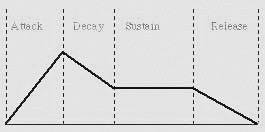
<strong>Connection.</strong> A favorite <strong>JazzMando</strong> quote, "<span class="orange">Good tone is all about what goes on between the notes--that magical intersection of the release of one note and the attack of the second</span>" ought to be written on the top of your music stand where you can see it every time you practice or rehearse. You simply can't ignore the end of a note and its relationship to the start of the following one. The ability to bond notes into something sonically cohesive is not always intuitive, and you have to work at this at slow tempos. The <a href="http://jazzmando.com/ffcp_studies.shtml" target=blank>FFcP</a> system is a great one for throwing all the possible finger combinations at you in order to develop this skill in your literature and other playing. Timing the pick stroke with this is another component, but focus on not dropping the pressure on the fretting finger until the next note starts.</p>

<p><strong>Phrasing.</strong> Try to phrase your playing like you speak sentences. You don't. Break. Up your thoughts by. Punctuating or dropping the intensity of. The line in inappropriate places. Good music is about finishing your thought, before you start the next. Start, line, stop. Analyze where these are in the music and communicate this way. You don't have the containment of breath like a wind instrumentalist or vocalist does, so you have to work harder to do this consciously. </p>

<p>We hope you've enjoyed our series on playing musically. Think the lyrics, play the chords, play with direction, and play with maximum tone. Get these down and you'll be much more convincing as a musician.</p>

<p>Further:<br />
<a href="http://mandolinsessions.com/apr07/Eschliman.html" target=blank>Thinking Good Tone Part 1: What the Pros say about Good Tone. </a><br />
<a href="http://mandolinsessions.com/jun07/Eschliman.html" target=blank>Thinking Good Tone Part 2: Using the picking hand to start Good Tone. </a><br />
<a href="http://jazzmando.com/tips/archives/000408.shtml" target=blank> Drilling for tone</a><br />
<a href="http://jazzmando.com/tips/archives/000333.shtml" target=blank>Components of Tone </a><br />
<a href="http://jazzmando.com/new/archives/000417.shtml" target=blank>Grisman on Tone </a><br />
<a href="http://jazzmando.com/tips/archives/000256.shtml" target=blank>Mind the Gap </a><br />
<a href="http://jazzmando.com/new/archives/000885.shtml" target=blank>Thinking bad tone </a><br />
<a href="http://jazzmando.com/new/archives/000562.shtml" target=blank>Clean Sweep... </a><br />
</p>]]>

</content>
</entry>
<entry>
<title>Playing musically: Part 3, play with direction</title>
<link rel="alternate" type="text/html" href="http://jazzmando.com/tips/archives/000972.shtml" />
<modified>2009-01-29T18:33:57Z</modified>
<issued>2009-01-29T18:13:44Z</issued>
<id>tag:jazzmando.com,2009:/tips/4.972</id>
<created>2009-01-29T18:13:44Z</created>
<summary type="text/plain">Last time we discussed playing with harmonic intent. Defining the vertical (harmonic) structure of the song, emphasizing corresponding chord tones tells the listener even on an intuitive level you know what you&apos;re doing. The next step is to think how...</summary>
<author>
<name>Ted</name>
<url>http://jazzmando.com</url>
<email>ted@jazzmando.com</email>
</author>

<content type="text/html" mode="escaped" xml:lang="en" xml:base="http://jazzmando.com/tips/">
<![CDATA[<p>Last time we discussed playing with harmonic intent. Defining the vertical <em>(harmonic)</em> structure of the song, emphasizing corresponding chord tones tells the listener even on an intuitive level you know what you're doing. The next step is to think how these chord tones are connected melodically, or linearly. </p>

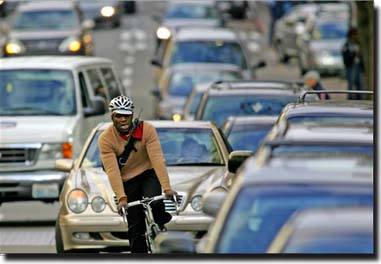
<p>In a very early <strong>Mandolin Sessions</strong> article, we described what we like to call "<span class="orange">Gravity Notes</span>" (see <a href="http://www.mandolinsessions.com/apr04/understanding.html" target=blank>April 2004</a>). These are also sometimes called "<strong>Approach Tones</strong>," but the concept is the same. It differs from "<strong>Passing Tones</strong>" in that it's one notch higher on the "intent" meter. In other words, passing tones are like child riding a bike in the park. "<strong>Gravity Notes</strong>" are like a professional courier riding a bike in urban traffic; there is an aesthetic purpose to get somewhere. </p>

<p><img alt="A purpose to get somewhere" src="http://jazzmando.com/tips/archives/images/courier.jpg" width="381" height="264" /></p>

<p>When you look closer at the major scale as we did in the article mentioned, there are two relationships that are heavier on melodic "pull." Inarguably, the <strong>7th scale degree </strong>longs for the <strong>8th</strong> (or 1st) in the tonic key. The next pull is the <strong>4th scale degree </strong>that wants to go done to the <strong>3rd</strong>. Don't miss the fact that these are the only half step relationships in the scale. That's significant in your ear, and it will also be on your fretboard.</p>

<p>Outside of the major scale you can find other similar pulls. How about the <strong>flatted 9th</strong>? Play an <strong>A minor </strong>chord and then play a single note <strong>Bb</strong>. Some tension in need of resolution? How about playing the blues, the raised <strong>4th</strong> (b5) has some arguably angry issues to deal with, too. Between that and the play between the <strong>Major 3rd</strong> and <strong>Minor 3rd</strong>, the blues vocabulary has quite a story to tell. <em>(And it's not just about girlfriend leaving, boss firing you, or the Cubs losing the pennant.)</em></p>

<p><strong>Tension/Resolution</strong> is the great drama and dialogue of Western music forms. Respect these in your improvisation and use them to weave in and out of implied chord backgrounds. You'll be writing your own musical script! </p>

<p><strong>Further</strong>:<br />
<a href="http://www.mandolinsessions.com/jun04/minor.html" target=blank>Some Minor issues: Seeking Resolutions</a><br />
<a href="http://mandolinsessions.com/dec08/Eschliman.html" target=blank>In the Mode: Easing into Modal Jazz</a><br />
<a href="http://mandolinsessions.com/dec05/jazz.html" target=blank>Three Four Pull: Foregoing the Fourth Finger Frack</a><br />
<a href="http://jazzmando.com/improvisation_pattern_based_vs_theory_based.shtml" target=blank>IMPROVISATION: PATTERN BASED VS. THEORY BASED</a><br />
</p>]]>

</content>
</entry>
<entry>
<title>Playing musically: Part 2, play the chords</title>
<link rel="alternate" type="text/html" href="http://jazzmando.com/tips/archives/000968.shtml" />
<modified>2009-01-22T17:49:19Z</modified>
<issued>2009-01-22T17:40:45Z</issued>
<id>tag:jazzmando.com,2009:/tips/4.968</id>
<created>2009-01-22T17:40:45Z</created>
<summary type="text/plain">Last week in Part 1, we looked at the &quot;spiritual&quot; side of playing, the muse inspiration of the lyrics. These week we want to talk more of the mechanics of playing, particularly the harmonic structure of our improvising. In a...</summary>
<author>
<name>Ted</name>
<url>http://jazzmando.com</url>
<email>ted@jazzmando.com</email>
</author>

<content type="text/html" mode="escaped" xml:lang="en" xml:base="http://jazzmando.com/tips/">
<![CDATA[<p>Last week in <a href="http://jazzmando.com/tips/archives/000963.shtml" target=blank>Part 1</a>, we looked at the "spiritual" side  of playing, the muse inspiration of the lyrics. These week we want to talk more of the mechanics of playing, particularly the harmonic structure of our improvising. In a nutshell, we want to be able to express the underlying chords of the song, in a melodic way of course, but in order to do that, we need to be able to express the chord changes in a linear way. (By the way, we also devote eight pages of exercises in the "<a href="http://jazzmando.com/gijm_20835bcd.shtml" target=blank>Getting Into Jazz Mandolin</a>" devoted to developing 7th chords in this manor.)</p>

<p><a href="http://jazzmando.com/tips/archives/000666.shtml" target=blank><img alt="4 Meas Maj7ths Sample" src="http://jazzmando.com/tips/archives/graphics/4MeasM7ths-thumb.jpg" width="400" height="79" /> <br />
<span class="blue">Click for page with sample exercises</span></a></p>

<p>Skipping notes in intervals of <strong>3rds</strong> feels funny on the mandolin because you are often alternating <strong>1st and 3rd</strong> fingers, <strong>2nd and 4th</strong> fingers, so improvisation can be somewhat counter-intuitive, but this is an important skill to develop. We don't want your soloing to sound like you're drilling arpeggios, but these patterns need to be in your fingers in order to express the chord.</p>

<p>We'll discuss the notes between the chords next week, but for now let's consider how important it is to be able to spell chords in a melody. One of the most annoying habits of a beginning jazzer  is taking a key and improvising only on scale degrees of the home key. First, this completely disregards the appearance of brief  and probable tonal center changes that require different scales, and second, it discounts the importance of note priority. Some notes are wrong (not part of the key), some notes are right (part of the key), and some notes are benign or somewhere in between (notes of the scale that aren't in the chord at the moment). A good improviser will avoid the first set (or intentionally use them as dissonance), emphasize the appropriate (linger on the chord tones), and use the benign ones as bridge notes between the chords. This is the true art of advanced improvisation. </p>

<p>For example, were you in the <strong>key of C</strong> and soloing over a <strong>Dm7</strong> chord, all the notes of a <strong>C Major scale </strong>would be fair game, <strong>C, D, E, F, G, A, B, C</strong>.  The better notes under this chord would the chord tones themselves, <strong>D, F, A, C</strong>, and anything else  from the C scale (E,G, B) should only be passing tones. Bad would be an <strong>F#</strong> because it would infer a conflicting D major or D7 chord, unless it were leading to a <strong>G7</strong> chord, but we'll leave that topic for next session. The point being, choose notes that express and emphasize the chord as much as possible.</p>

<p>Because of the mandolin's lighter texture and higher soprano register, we tend to shine in thinner ensemble settings. This means fewer instruments to carry the accompaniment load and the song's harmonic content, so the burden is very much on us to carry the harmonic content vertically while soloing.</p>

<p>Knowing music theory is most beneficial, but just knowing the chord tones is enough to get you started. Use the notes of the chords you already know; figure out where the missing chord tones and use the "<strong>grip</strong>" as a jumping off point for your improvisation. From there, all you have to do is hunt and peck for the  appropriate sounding connecting or passing tones. It also helps to drill <strong>7th chord arpeggios</strong> into your practice regimen.</p>

<p>Further:<br />
<a href="http://jazzmando.com/tips/archives/000666.shtml" target=blank> Four Finger Salute to Major Seven!</a><br />
<a href="http://jazzmando.com/tips/archives/000808.shtml" target=blank> Grip#1</a><br />
<a href="improvisation_pattern_based_vs_theory_based.shtml" target=blank> Improvisation: Pattern Based vs. Theory Based</a><br />
<a href="http://jazzmando.com/tips/archives/000485.shtml" target=blank> Jazzed Pentatonics</a></p>]]>

</content>
</entry>
<entry>
<title>Playing musically: Part 1, play the lyrics</title>
<link rel="alternate" type="text/html" href="http://jazzmando.com/tips/archives/000963.shtml" />
<modified>2009-01-15T13:21:12Z</modified>
<issued>2009-01-15T12:08:12Z</issued>
<id>tag:jazzmando.com,2009:/tips/4.963</id>
<created>2009-01-15T12:08:12Z</created>
<summary type="text/plain">We&apos;re starting a multi-part series on &quot;Playing Musically,&quot; hoping to stir up some playing sensitivities and sensibilities on making your mandolin performing more expressive and more aesthetically pleasing. The first installment deals with the issue of lyrics. As instrumentalists, we...</summary>
<author>
<name>Ted</name>
<url>http://jazzmando.com</url>
<email>ted@jazzmando.com</email>
</author>

<content type="text/html" mode="escaped" xml:lang="en" xml:base="http://jazzmando.com/tips/">
<![CDATA[<p>We're starting a multi-part series on "<strong>Playing Musically</strong>," hoping to stir up some playing sensitivities and sensibilities on making your mandolin performing more expressive and more aesthetically pleasing. The first installment deals with the issue of lyrics. As instrumentalists, we can easily get by without thinking the words of a song, but let's explore what lyric content can do for melodic interpretation and execution.</p>

<p>Bop tenor saxophonist <strong>Dexter Gordon</strong> has gone on record as an advocate for understanding the <em>words </em>of a song and their instrumental impact. His practice was to never blow the note of a new song until he'd memorized its lyrics. Think about what the message of the words would do to the impact of the way a song is interpreted melodically:</p>

<p><span class="blue"><strong>The Days of Wine and Roses </strong>(Henry Mancini - Johnny Mercer)</p>

<p><em>The days of wine and roses laugh and run away like a child at play<br />
Through a meadow land toward a closing door<br />
A door marked "nevermore" that wasn't there before</p>

<p>The lonely night discloses just a passing breeze filled with memories<br />
Of the golden smile that introduced me to<br />
The days of wine and roses and you.</em> </span></p>

<p>Ponder the above lyrics, and consider how Gordon's tenor sax would blow through the intellectual content, musically. How can you put into <strong>Fs</strong> <strong>As</strong>, and <strong>Cs</strong>, <strong>articulations</strong>, <strong>dotted quarter notes</strong>, <strong>eighths</strong>, all the <em>mechanics</em> of delivery? Thoughts of lonely nights, days running away, laughing like playing children, these call for a completely different approach to the mechanics than if we were "blowing" a song like <strong>Rocky Top</strong> on the mandolin:<br />
 <br />
<span class="blue"><strong>Rocky Top</strong> (Boudleaux Bryant - Felice Bryant)</p>

<p><em>Wish that I was on old Rocky Top<br />
Down in the Tennessee hills<br />
Ain't no smoggy smoke on Rocky Top<br />
Ain't no telephone bills.</p>

<p>Once I had a girl on Rocky Top<br />
Half bear the other half cat<br />
Wild as a mink but sweet as soda pop<br />
I still dream about that.</p>

<p>Rocky Top you'll always be<br />
Home sweet home to me<br />
Good ole Rocky Top, Rocky Top, Tennessee<br />
Rocky Top, Tennessee.</em> </span></p>

<p>Both songs communicate a "pondering," but you have a different geography, culture, (arguably) sophistication, and attitude. One might call for differences in sustain, melodic punctuation, even the harmonic implications themselves in order to be more consistent with the song's integrity requires a different delivery, but if you never saw the lyrics and only notes or TAB on the page, you couldn't communicate the aesthetics of the song, the deeper meaning.</p>

<p>Check out the lyrics of the next song you play on the mandolin. What kind of musical pictures can you paint with your phrasing, your intensity of energy, the manner in which you plunge your pick into the strings and grip the frets, the overall "busy-ness" of the music? You'd be surprised at what you can do when you just put your mind to it.</p>

<p>The real beauty in the art of making music--there is no one single interpretation. No "right" answer.</p>

<p><em>Still it remains, knowing the lyrics will take you into a much deeper aesthetic level of playing and enjoyment of the song for you and your audience.</em><br />
</p>]]>

</content>
</entry>
<entry>
<title>January Fitness</title>
<link rel="alternate" type="text/html" href="http://jazzmando.com/tips/archives/000959.shtml" />
<modified>2009-01-08T17:53:17Z</modified>
<issued>2009-01-08T17:02:55Z</issued>
<id>tag:jazzmando.com,2009:/tips/4.959</id>
<created>2009-01-08T17:02:55Z</created>
<summary type="text/plain">It&apos;s as predictable as the yearly Spring Thaw, only about 3 months earlier. The increased lines at the machines at the gym for the newly &quot;committed,&quot; the barrage of diet plan commercials, those seeking restoration and restitution after a month-long...</summary>
<author>
<name>Ted</name>
<url>http://jazzmando.com</url>
<email>ted@jazzmando.com</email>
</author>

<content type="text/html" mode="escaped" xml:lang="en" xml:base="http://jazzmando.com/tips/">
<![CDATA[<p>It's as predictable as the yearly Spring Thaw, only about 3 months earlier. The increased lines at the machines at the gym for the newly "committed," the barrage of diet plan commercials, those seeking restoration and restitution after a month-long holiday hiatus from healthy eating and exercise, it's all a part of the ritual cleansing associated with well-intentioned New Year's resolutions. </p>

<p>Our playing can be like this. <strong>Don Stiernberg</strong> tells us he's going to dig into his 5-string for 2009, others have sworn allegiance to a regimen of <a href="http://jazzmando.com/ffcp_studies.shtml" target=blank>FFcP</a>, some register the intent to learn a new Choro every week. It's always good to set new goals; even when we fail to complete them, at least some degree of forward motion is healthy. The key to endurance and perserverance of course is to be realistic, and create lifestyle patterns and acquire the proper tools to get the job done.</p>

<p><em>Long term.</em></p>

<p>Realistic? Is your newfound goal something you can strategically map out over time? It's one thing to commit to strengthening your pinky, and another to commit to 10 minutes of <strong>FFcP </strong>five days a week for the next two months. One is merely a wish, the other a plan. The first is a dream, the second actually creates change.</p>

<p>Do you have a designated playing area where you can spend time free of potential distractions or disruption? This geography may be a luxury for some, but you have to admit if you're in someone else's way, you've got a chronic barrier. How about time of day or week? Are you a morning person or evening; you'll want to practice when mind and body are in peak efficiency. </p>

<p>Tools? Hopefully, you've uncovered the vast resources here on the <strong>JazzMando </strong>site, but consider a hale and hearty balance of literature and exercises, songs and chopbusters. You do well to work patterns that are incorporated in the songs you play, work the key of <strong>F#</strong> when the song is in <strong>F#</strong>, work up-the-neck drills when you want to improvise up the fretboard. <em>Application</em> makes things stick in your brain.</p>

<p>A quick plug for our book, of course <em>(you'd expect nothing less...)</em> . <a href="http://jazzmando.com/gijm_20835bcd.shtml" target=blank>Getting Into Jazz Mandolin</a> has many tools, but there is a big picture strategy to the whole thing. Sure you can dabble with the drills, but if you can commit to the structure of the book, you'll learn finger positions and patterns that enable your ears and intellect to uncover a lot more higher level thinking and playing. It's not just a nifty chest of tools, it's an entire <em>workshop</em>. </p>

<p>Another good resource if you haven't purchased it already is <strong>Craig Schmoller's</strong> "<span class="orange">Mando ModeExplorer</span>" Windows-based software program. We've written a review on it <a href="http://jazzmando.com/groveland.shtml" target=blank>here</a>, and all his supplementary materials are pure gold.</p>

<p>Check out <a href="http://jazzmando.com/new/archives/000738.shtml" target=blank>Free ModeExplorer Expedition Outfitters</a>. Great stuff!</p>

<p>Buy the software: <a href="http://www.grovelandsoftwarelabs.com/modeexplorerweb/home/buy/buymando.aspx" target=blank>Mando ModeExplorer</a><br />
</p>]]>

</content>
</entry>
<entry>
<title>Chord Melody &quot;Moonlight in Vermont&quot; from Shelby Eicher</title>
<link rel="alternate" type="text/html" href="http://jazzmando.com/tips/archives/000954.shtml" />
<modified>2009-01-01T12:03:08Z</modified>
<issued>2009-01-01T11:58:56Z</issued>
<id>tag:jazzmando.com,2009:/tips/4.954</id>
<created>2009-01-01T11:58:56Z</created>
<summary type="text/plain">A couple weeks ago, we introduced you to National Fiddler Hall of Famer, Shelby Eicher in our Tips and Tricks column. He offered us a brilliant and timely example of chord melody playing of the seasonal &quot;Christmas Time is Here.&quot;...</summary>
<author>
<name>Ted</name>
<url>http://jazzmando.com</url>
<email>ted@jazzmando.com</email>
</author>

<content type="text/html" mode="escaped" xml:lang="en" xml:base="http://jazzmando.com/tips/">
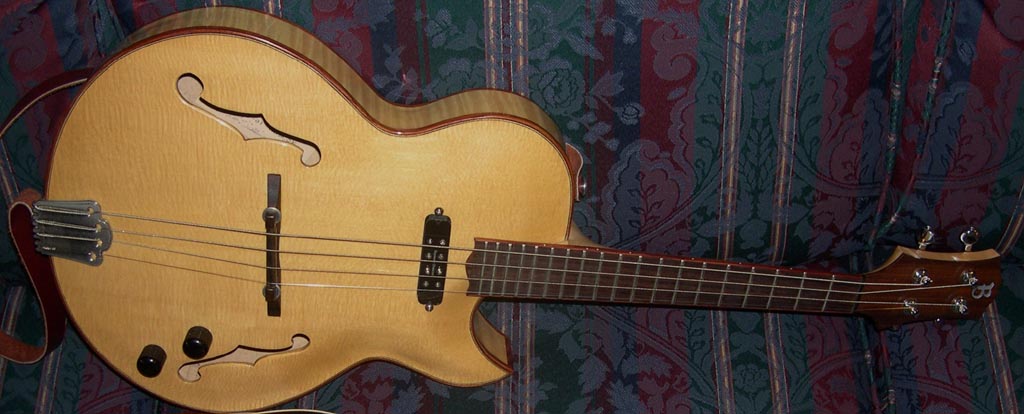
<![CDATA[<p>A couple weeks ago, we introduced you to National Fiddler Hall of Famer, <span class="orange">Shelby Eicher</span> in our <strong>Tips and Tricks</strong> column.  He offered us a brilliant and timely example of chord melody playing of the seasonal "<a href="http://jazzmando.com/tips/archives/000945.shtml" target=blank>Christmas Time is Here</a>." The holiday season now behind us, we thought it would be great to start off the <strong>New Year</strong> with another of Shelby's timeless audio gems, a clever Johnny Smith-like rendition of "<strong>Moonlight in Vermont</strong>," recorded on Eicher's terrific custom <a href="http://jazzmando.com/tips/archives/images/EicherDola.jpg" target=blank>jazz mandola</a>.</p>

<p>Shelby shared with us in an earlier correspondence, <em>"I've been fascinated with substitutions for dominant chords. The common ones are: 5minor, augmented, 9th--more outside thinking: b9 #9, whole tone scales, b5 subs, go up a half step and play a minor scale (this makes a b9 #9 Aug). These are all used in soloing."</em> Remaining the perpetual student, the accomplished musician confesses, <em>"Playing electric is new territory for me. I've always been a acoustic player but I dig the possibilities that this lends me that the acoustic does not and vice versa."</em></p>

<p>The <strong>Western Swing</strong> specialist has slowed this ballad down to something you can learn yourself; he's even scratched a helpful TAB chart to give you some fingering tips. We're looking forward to hearing more of Shelby's thoughts and tips the rest of 2009!</p>

<p>Enjoy audio: <a href="http://jazzmando.com/sound/SE_Moonlight.m4a" target=blank><img src="http://jazzmando.com/images/sound.gif" width="11" height="11" border="0">"Moonlight in Vermont" arr. Shelby Eicher</a> </p>

<p>Download <a href="http://jazzmando.com/tips/archives/print/Moonlight_Eicher.pdf"><img src="http://jazzmando.com/images/pdf_sm.gif" width="16" height="16" border="0">  TAB PDF</a>.</p>]]>

</content>
</entry>
<entry>
<title>Doo Wop and FFcP: &apos;I vi7 ii7 V7&apos;</title>
<link rel="alternate" type="text/html" href="http://jazzmando.com/tips/archives/000950.shtml" />
<modified>2008-12-26T01:14:20Z</modified>
<issued>2008-12-25T14:44:27Z</issued>
<id>tag:jazzmando.com,2008:/tips/4.950</id>
<created>2008-12-25T14:44:27Z</created>
<summary type="text/plain">Speaking of Christmas, we just received an interesting obeservation from JazzMando Research Assistant, Tom Weisman who has been working on &quot;Have Yourself a Merry Little Christmas.&quot; He observes&quot;the first part of the song goes: C Am7 Dm7 G7), (I) realized...</summary>
<author>
<name>Ted</name>
<url>http://jazzmando.com</url>
<email>ted@jazzmando.com</email>
</author>

<content type="text/html" mode="escaped" xml:lang="en" xml:base="http://jazzmando.com/tips/">
<![CDATA[<p>Speaking of Christmas, we just received an interesting obeservation from JazzMando Research Assistant, <strong>Tom Weisman</strong> who  has been working on "Have Yourself a Merry Little Christmas." He observes<em>"the first part of the song goes: <strong>C Am7 Dm7 G7</strong>), (I) realized this part of thesong is the same progression as that in your super <strong>FFcP </strong>exercise (i.e. <strong>I iv ii V7</strong>)." </em></p>

<p>Excerpted from the "<a href="http://jazzmando.com/gijm_20835bcd.shtml" target=blank>Getting Into Jazz Mandolin</a> FFcP Exercises:"<br />
<a href="http://jazzmando.com/tips/archives/images/FFcP_Prog.jpg" target=blank><img alt="Excerpted from 'Getting Into Jazz Mandolin' FFcP Patterns" src="http://jazzmando.com/tips/archives/images/FFcP_Prog-thumb.jpg" width="400" height="78" /></a><br />
<em>Click for better view</em></p>

<p>That beginning chord progression is a very common one; think 50's "Doo Wop" genre as in <em>"Why do Fools Fall in Love?" </em>or <em>"Heart and Soul."</em> It's a great progression that never leaves the key, and there is a very strategic reason for inserting it in the <strong>FFcP </strong>catechism. </p>

<p>First, we think it's a good one to get into your ears because it is so common, and spelling the chords out linearly is good for associating the music's harmonic structure with improvising. It's also very healthy voice leading; you don't want to arpeggiate your chords with the root note in the bass all the time. Jumping from <strong>CEGB </strong>to <strong>ACEG </strong>to <strong>DFAC </strong>to <strong>GBDF </strong>is far too disjunct melodically; much better to keep closely related chord tones in the same vicinity, and spelled above is <strong>CEGB</strong>, <strong>CEGA</strong>, <strong>DFAC</strong>, <strong>DFGB</strong>. Thinking theoretically the whole chord in an inversion like this takes years of experience, but this is a healthy way to get the sound of this progression into an "auto-pilot" proficiency in your fingers.</p>

<p>If you've been able to get proficient all 12 keys with the <strong>FFcP </strong>regimen, this pattern is now (literally) at your fingertips. You can do variations on this by just taking the last two measures and working the <strong>'ii7 V7' </strong>cadence all over the fretboard. Try playing these last two measures in other inversions:</p>

<p><strong>DFAC </strong>to <strong>DFGB</strong><br />
<strong>FACD </strong>to <strong>FGBD</strong><br />
<strong>ACDF </strong>to <strong>GBDF</strong><br />
<strong>CDFA </strong>to <strong>BDFG</strong></p>

<p>The simple <strong>'ii7 V7'</strong> is such an important progression to be able to communicate melodically; it's very much worth the time to teach it to your fingers in all keys, and the <strong>FFcP</strong> approach can get you systematically down that road.</p>]]>

</content>
</entry>
<entry>
<title>Shelby Eicher; TAB and audio for &quot;Christmas Time is Here&quot;</title>
<link rel="alternate" type="text/html" href="http://jazzmando.com/tips/archives/000945.shtml" />
<modified>2008-12-18T15:53:24Z</modified>
<issued>2008-12-18T15:33:16Z</issued>
<id>tag:jazzmando.com,2008:/tips/4.945</id>
<created>2008-12-18T15:33:16Z</created>
<summary type="text/plain">We have a Christmas treat for you from JazzMando Oklahoma correspondent Shelby Eicher, a clever rendition of the Peanuts cartoon classic, &quot;Christmas Time is Here.&quot; Serving as Director of Education for the National Fiddler Hall of Fame (NFHoF) whose mission...</summary>
<author>
<name>Ted</name>
<url>http://jazzmando.com</url>
<email>ted@jazzmando.com</email>
</author>

<content type="text/html" mode="escaped" xml:lang="en" xml:base="http://jazzmando.com/tips/">
<![CDATA[<p>We have a Christmas treat for you from JazzMando Oklahoma correspondent <span class="orange">Shelby Eicher</span>, a clever rendition of the Peanuts cartoon classic, "<strong>Christmas Time is Here</strong>." Serving as Director of Education for the <strong>National Fiddler Hall of Fame</strong> (NFHoF) whose mission is to <em>"establish and maintain a permanent National Fiddler Hall of Fame, to develop and promote public interest in old time fiddling, and country and bluegrass music,"</em> semi-retired Eicher invests his time in school outreach programs with school assemblies and live demonstrations, along with organizing training programs, fiddle camps, fiddle tours, concert series, and fiddle competitions.</p>

<p>Obviously, Shelby's main background is fiddle, but as a rabid <strong>Western Swing</strong> aficionado, he's taking to the 4-string plectrum, and in this case a jazz <strong>Mandola</strong>, designed and built in Tulsa around 15 years ago when he was playing with <strong>Roy Clark</strong>. Shelby reports, <em>"He completed the instrument in 2001. All of the pickups that I tried in it were inferior. I had Seymour Duncan make me custom humbuckers last year and they are great although I only have the neck pickup in at this time. I'm still undecided whether to put the bridge pickup in or not. My scale length is 16 3/4. The woods are spruce and maple and the binding is Tulip wood. The A D G C tuning is awesome for Jazz. The more I play it the more I like the way everything lays on the instrument." </em> <br />
 <br />
<a href="http://jazzmando.com/tips/archives/images/EicherDola.jpg"><img alt="Jazz Mandola of Shelby Eicher; click for close-up" src="http://jazzmando.com/tips/archives/images/EicherDola-thumb.jpg" width="400" height="161" /></a></p>

<p>We'll be bringing you more from this amazing musician in the future, but for now, put your instrument down and warm up the hot cocoa for this favorite seasonal tune. He's been gracious enough to include some TAB outlines for tips if you want to tackle it yourself, but understand it's performed in the <strong>CGDA</strong> mandola tuning when you listen. (Of course you can still play this on mando, it will just be a 5th higher.)</p>

<p>Enjoy audio: <a href="http://jazzmando.com/sound/SE_Christmas_Time.m4a" target=blank><img src="http://jazzmando.com/images/sound.gif" width="11" height="11" border="0">Shelby Eicher: Christmas Time is Here</a>.</p>

<p>Christmas Time is Here <a href="http://jazzmando.com/print/SE_ChristmasTime.pdf" target=blank><img src="http://jazzmando.com/images/pdf_sm.gif" width="16" height="16" border="0"> TAB PDF</a>.</p>

<p><br />
</p>]]>

</content>
</entry>
<entry>
<title>Under my thumb</title>
<link rel="alternate" type="text/html" href="http://jazzmando.com/tips/archives/000941.shtml" />
<modified>2008-12-11T22:00:32Z</modified>
<issued>2008-12-11T21:47:47Z</issued>
<id>tag:jazzmando.com,2008:/tips/4.941</id>
<created>2008-12-11T21:47:47Z</created>
<summary type="text/plain">We recently received an interesting observation from one of our JazzMando regulars, Tom Weisman in regards to thumb position on the pick. Tom writes, &quot;For whatever reason, over the years of using the flatpick on the guitar and now mando,...</summary>
<author>
<name>Ted</name>
<url>http://jazzmando.com</url>
<email>ted@jazzmando.com</email>
</author>

<content type="text/html" mode="escaped" xml:lang="en" xml:base="http://jazzmando.com/tips/">
<![CDATA[<p>We recently received an interesting observation from one of our JazzMando regulars, <strong>Tom Weisman</strong> in regards to thumb position on the pick. Tom writes, <em>"For whatever reason, over the years of using the flatpick on the guitar and now mando, I micro-managed the pick by flexing/extending the distal interphalangeal joint of my thumb.  My insight is that the joints of the thumb should be passive, and the up/down picking of individual notes should arise from the wrist (the major pivot point).  By looking at videos, it seems like the thumb joints are usually left in extension, but even if held in some degree of flexion they remain stable and the motion (and hence control) is at the wrist.  This increases accuracy/consistency/control.  After 4 years mando/35 years guitar playing I have developed a habit that has significantly limited my sound.  I am working on this change whenever I practice, but recognize when I approach a difficult passage, my tendency is to revert to my old habit."</em></p>

<p>There are many variables to pick grip, and not many are a "one-size-fits-all" proposition, but we feel quite strongly that a loosely extended thumb is not the best way to control the pick. Tom makes a good point. A slightly bent lock gives much better control as well as power. Think about a tennis arm swing; if you extended both upper and lower arm in the swing rather than locking the elbow cocked at contact, you'd lose exponential control over the ball during the swing.</p>

<p>The same could be said pushing a '72 El Camino out of a snowbank. Imagine leaning over the back bumper with your back and legs extended straight. You could never get the grip, traction, or power to really push if you weren't in some kind of locked, semi-crouch position. Your thumb plays the integral part of power in your pickstroke; a healthy downstroke depends on a healthy, vital grip on the pick.</p>

<p><br />
More thoughts on <a href="http://jazzmando.com/tips/archives/000169.shtml" target=blank>pick grip.</a> </p>]]>

</content>
</entry>
<entry>
<title>Forsaking the notes for the music.</title>
<link rel="alternate" type="text/html" href="http://jazzmando.com/tips/archives/000936.shtml" />
<modified>2008-12-04T17:32:28Z</modified>
<issued>2008-12-04T17:11:08Z</issued>
<id>tag:jazzmando.com,2008:/tips/4.936</id>
<created>2008-12-04T17:11:08Z</created>
<summary type="text/plain">A couple years ago, we wrote an article about taking drab exercises and drills and injecting higher aesthetics into them--as a matter of routine. Of course, that notion seems contradictory at first, if not oxymoronic. Planned spontaneity? Structured creativity? Reread...</summary>
<author>
<name>Ted</name>
<url>http://jazzmando.com</url>
<email>ted@jazzmando.com</email>
</author>

<content type="text/html" mode="escaped" xml:lang="en" xml:base="http://jazzmando.com/tips/">
<![CDATA[<p>A couple years ago, we wrote an article about taking drab exercises and drills and injecting higher aesthetics into them--as a matter of routine. Of course, that notion seems contradictory at first, if not oxymoronic. Planned spontaneity? Structured creativity? </p>

<p>Reread article: <a href="http://jazzmando.com/tips/archives/000186.shtml" target=blank>Real Swell... </a></p>

<p><img alt="Swell.jpg" src="http://jazzmando.com/tips/archives/images/Swell.jpg" width="400" height="128" /></p>

<p><br />
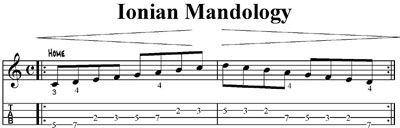
<strong>Mike Marshall</strong> has an excellent <a href="http://elderly.com/videos/items/300-DVD337SET.htm" target=blank>DVD set</a> out now. <em>(We'll be posting a review later, by the way.)</em> At the end of <strong>Disc One</strong>, in summary he discusses playing your scales with rich tone, and ALWAYS playing them musically. Don't just play a sequence of sterile notes, play them as <em>music</em>. The above graphic demonstrates a nice twist to the first measures of the very beginning <a href="http://jazzmando.com/ffcp_studies.shtml" target=blank>FFcP</a> pattern, an approach you can use through the entire duration of the exercise.</p>

<p>Notice this is not as easy as you might think it is, playing with controlled sustain, smooth even volume, no dynamic jerk or breaks between the notes. One day you can focus on playing all your <strong>FFcP</strong> <em>(or any other repetitive scales)</em> this way. Next day, try doing it in reverse; start loud and play soft in the middle of the two measures. Another variation is to start as soft as you can, end the measures as loud as you can. <em>Follow up with the converse.</em></p>

<p>If you haven't developed the control necessary to pull this off, you're not likely to play your songs or literature with ANY semblence of dynamic finesse. By playing something you already have in your fingers, this sort of pattern, you really free up the brain to focus on tone and even execution.<br />
<hr></p>

<p>Other variations? How about accenting every other note, the upbeat, working on your upstroke. If you really want to swing, this ability is critical. For many it's not all that intuitive, either. <span class="blue">Teach your hands and pick this ability, it will show up in your music.</span> </p>

<p>The beauty of all this is you aren't adding to the practice time, you're simply making it more efficient. If you're already doing the scales as warm-ups anyway, this just injects a little variety, let alone musicality in your routine. Enjoy yourself!</p>

<p><em>Swing and swell...</em></p>

<p>Extra Credit: <a href="http://mandolinsessions.com/jun05/mandology.html">MandolinSessions Archive</a></p>]]>

</content>
</entry>
<entry>
<title>Choosing a mandolin</title>
<link rel="alternate" type="text/html" href="http://jazzmando.com/tips/archives/000932.shtml" />
<modified>2008-11-27T15:01:50Z</modified>
<issued>2008-11-27T14:39:51Z</issued>
<id>tag:jazzmando.com,2008:/tips/4.932</id>
<created>2008-11-27T14:39:51Z</created>
<summary type="text/plain">We enjoyed viewing the online tour at the SmokeMusic Archives with the accompanying Bob Moses print article, How to Buy a Mandolin. Live commentary and insights from our friend Brad Einhorn (Kings County Strings) and retail legend Stan Jay of...</summary>
<author>
<name>Ted</name>
<url>http://jazzmando.com</url>
<email>ted@jazzmando.com</email>
</author>

<content type="text/html" mode="escaped" xml:lang="en" xml:base="http://jazzmando.com/tips/">
<![CDATA[<p>We enjoyed viewing the online tour at the <strong>SmokeMusic Archives</strong> with the accompanying <strong>Bob Moses</strong> print article, <a href="http://www.smokemusic.tv/content/how-buy-mandolin" target=blank>How to Buy a Mandolin</a>. Live commentary and insights from our friend <strong>Brad Einhorn</strong> (<a href="http://www.kingscountystrings.com/">Kings County Strings</a>) and retail legend Stan Jay of <a href="http://www.mandoweb.com/" target=blank>Mandolin Brothers</a> make you feel your right there midst a world class collection of mandolins to poke and pick. This is a short video and worth a few minutes to watch.</p>

<p><a href="http://www.smokemusic.tv/content/how-buy-mandolin" target=blank><img alt="Click for redirect" src="http://jazzmando.com/tips/archives/images/sma.gif" width="61" height="37" /></a></p>

<p>We tackled this subject in an archived article, <a href="http://jazzmando.com/tips/archives/000518.shtml" target=blank> The Basics of Auditioning Instruments</a> with some important considerations. Getting over the initial fascination of a new or foreign instrument, one needs to take into account the proper amount of time needed to adapt and assess, allow for the mandolin's adjustable variables, and the environment of the audition itself. </p>

<p>If you've got a few minutes, go back and review this article. Note it is now the holiday season; you harbor a responsibility in single-handedly reviving the disastrous global economy with a purchase in a new instrument.</p>

<p><em>At least it makes a good excuse for the spouse...</em></p>

<p>How about buying one of <a href="http://www.acousticvibesmusic.com/catalog/index.php?main_page=product_info&cPath=4_61&products_id=650&zenid=e3fa8f8d99fb77800680b27c32b00f6a" target=blank>these</a>? <em>First one to contact Jeff gets another $200 knocked of the price by mentioning this article.</em></p>]]>

</content>
</entry>
<entry>
<title>A common mistake. Clacky, clacky...</title>
<link rel="alternate" type="text/html" href="http://jazzmando.com/tips/archives/000927.shtml" />
<modified>2008-11-20T12:14:14Z</modified>
<issued>2008-11-20T12:08:16Z</issued>
<id>tag:jazzmando.com,2008:/tips/4.927</id>
<created>2008-11-20T12:08:16Z</created>
<summary type="text/plain">Question: How do you get two piccolo players to play in unison and in tune? Shoot one of them... It&apos;s an old band director joke, and it illustrates an important acoustic principle. Two tubas playing slightly out of tune or...</summary>
<author>
<name>Ted</name>
<url>http://jazzmando.com</url>
<email>ted@jazzmando.com</email>
</author>

<content type="text/html" mode="escaped" xml:lang="en" xml:base="http://jazzmando.com/tips/">
<![CDATA[<p><strong>Question: </strong>How do you get two piccolo players to play in unison and in tune?</p>

<p><em>Shoot one of them...</em><hr></p>

<p>It's an old band director joke, and it illustrates an important acoustic principle. Two tubas playing slightly out of tune or rhythm will not be nearly as offensive to the ear as the higher pitch instruments, and this all has to do with register. High pitches are more directional, distinguished easier; microphones designed for speaking rely on presence and highs simply because the ear can distinguish words and enunciation in the upper timbres. This phenomenon is just important to recognize for mandolinists.<br />
 <br />
In general, when integrating a mandolin into a group of folk/pop music musicians or church praise band, most newbies tend to approach the mandolin as they would a guitar. Certainly, the tiny mandolin can be played quietly, but because of its relatively higher register, it can also be brutally percussive in impact when struck hard. A heavy picking style in the right instrument can penetrate the ensemble like a cowbell, and even at medium volumes, muddy the sound of a guitar playing the same "clacky, clacky" rhythm accompaniment.</p>

<p>If mandolin and guitar are playing the same rhythmic pattern, they have to be exactly synchronized, or the resulting sloppy, conflicting clash will be blamed on the mandolin. High sounds are more easily identified, and the deeper timbre of the lower strings can cover up bad technique much easier on a guitar. This is compounded when you have multiple strumming instruments pounding out a simultaneous subdivided background drone.</p>

<p>You will greatly free up your playing (let alone open up the sound of the ensemble) when you put space in your accompanying. This is why the "chop" sound is so closely associated with the mandolin; it functions so well as a the accent of the band, imitating a hi-hat in jazz, or a cowbell in rock and roll (not a pair of maracas or shaker). You are also well-served listening to the drummer (if you don't have one, you ARE the drummer!), accenting the same band hits, not just on the backbeats, but critical accents in the music.</p>

<p>You don't have to do this all the time, best when you can trade off rhythmic support duties with other members of the band. It will be more enriching for your mental state, and it freshens its sound when going from verse to chorus to bridge, and back.</p>]]>

</content>
</entry>
<entry>
<title>Lydian Tricks</title>
<link rel="alternate" type="text/html" href="http://jazzmando.com/tips/archives/000920.shtml" />
<modified>2008-11-14T02:26:06Z</modified>
<issued>2008-11-14T02:20:29Z</issued>
<id>tag:jazzmando.com,2008:/tips/4.920</id>
<created>2008-11-14T02:20:29Z</created>
<summary type="text/plain">We&apos;re excited to see students of our recent release, Getting Into Jazz Mandolin digging in deep enough to start making their own interpretations of the book&apos;s five concept tunes. In particular, our Alaska-based research assistant, Ken Olmstead had documented his...</summary>
<author>
<name>Ted</name>
<url>http://jazzmando.com</url>
<email>ted@jazzmando.com</email>
</author>

<content type="text/html" mode="escaped" xml:lang="en" xml:base="http://jazzmando.com/tips/">
<![CDATA[<p>We're excited to see students of our recent release, <a href="http://www.melbay.com/product.asp?ProductID=20835BCD" target=blank>Getting Into Jazz Mandolin</a> digging in deep enough to start making their own interpretations of the book's five concept tunes. In particular, our Alaska-based research assistant, <a href="http://www.youtube.com/user/tenorbanjoguy" target=blank>Ken Olmstead</a> had documented his own impressive rendition of "<a href="http://jazzmando.com/print/GJM_Lydia%20O'Lydia.pdf" target=blank>Lydia O'Lydia </a>." </p>

<p>Ken takes a little different tack than the others already posted by <strong>Don Stiernberg</strong>, <strong>Will Patton</strong>, and <strong>Don Julin</strong>, abandoning the Latin feel for a more laid back swing. He also exposes a great tip in improvising over a #11 or Lydian pattern, using the <strong>Major 7 </strong>chord arpeggio based on the <strong>5th scale degree</strong>. In this song, the two key centers <strong>G</strong> and <strong>Bb</strong> would use a <strong>D Maj7</strong>, and an <strong>F Maj7</strong> arpeggio respectively. Outlining these two chord in inversions up and down the fretboard gives you a tremendous roadmap, and unlocks the Lydian Mode's fertile mood. From there, it's just a matter of filling the notes in between.</p>

<p>Enjoy <a href="http://www.youtube.com/watch?v=SieAo9TNl-Q" target=blank>Ken's video</a></p>

<p><object width="425" height="344"><param name="movie" value="http://www.youtube.com/v/SieAo9TNl-Q&hl=en&fs=1"></param><param name="allowFullScreen" value="true"></param><param name="allowscriptaccess" value="always"></param><embed src="http://www.youtube.com/v/SieAo9TNl-Q&hl=en&fs=1" type="application/x-shockwave-flash" allowscriptaccess="always" allowfullscreen="true" width="425" height="344"></embed></object></p>

<p>Weigh in with comments: <a href="http://www.mandolincafe.com/forum/showthread.php?t=45451" target=blank>Mandolin Cafe Discussion Board</a><br />
Listen to other instructional entries in the <a href="http://jazzmando.com/webtracks.shtml#1" target=blank>PROFESSIONAL'S SOUND LAB </a>.<br />
<hr></p>

<p>Have a video or audio recording of your own? We'd love to post it and give other's the opportunity to look under the hood of the process of other musician's creativities. Let us know...<br />
</p>]]>

</content>
</entry>
<entry>
<title>&apos;Stealing&apos; Into Third Base</title>
<link rel="alternate" type="text/html" href="http://jazzmando.com/tips/archives/000916.shtml" />
<modified>2008-11-06T18:33:07Z</modified>
<issued>2008-11-06T18:24:08Z</issued>
<id>tag:jazzmando.com,2008:/tips/4.916</id>
<created>2008-11-06T18:24:08Z</created>
<summary type="text/plain">We recently received feedback from J. Spaulding that prompted us to dig up an archived Feb 2007 Mandolin Sessions article, Leading Off Third Base: The benefits of third position fingering. J writes, &quot;This weekend, I transposed &quot;Take Five&quot; from Ebm...</summary>
<author>
<name>Ted</name>
<url>http://jazzmando.com</url>
<email>ted@jazzmando.com</email>
</author>

<content type="text/html" mode="escaped" xml:lang="en" xml:base="http://jazzmando.com/tips/">
<![CDATA[<p>We recently received feedback from J. Spaulding that prompted us to dig up an archived Feb 2007 <strong>Mandolin Sessions</strong> article, <a href=" http://mandolinsessions.com/feb07/Eschliman.html" target=blank>Leading Off Third Base: The benefits of third position fingering</a>. J writes, <em>"This weekend, I transposed "Take Five" from Ebm to Am to allow full use of my "first position" skills - then tried to play <strong>FCCP </strong>in the original Ebm--well, my "up the neck" skills are in desperate need of attention. This confrontation with reality prompted me to order your book, which will certainly lead me in colorful and helpful directions!"</em></p>

<p>He's absolutely right about two things in particular, one the book will lead him in "colorful and helpful directions," and two, the <strong>FFcP </strong>will be crucial in starting him down that path...</p>

<p>As far as the "up the neck" frontier, one tip that can ease you to the next step after spending quality time with the <a href="http://jazzmando.com/ffcp_studies.shtml" target=blank>FFcP Exercises</a>, even though one might try to play more in the <strong>5th</strong> and <strong>7th position</strong> (<strong>1st</strong> finger on <strong>5th</strong> or <strong>7th fret</strong>), first spend time reading through lots of <a href="http://jazzmando.com/tuneage.shtml" target=blank>Jazz Standards</a> (or even Folk/Fiddle Tunes you know) in <strong>3rd position</strong>. As the aforementioned article explores, think of your first finger on the <strong>3rd</strong> fret as home base, and allow yourself the occasional 'trick' open string. Plus, if you run across a tonal shift down a half step in literature, you have built-in occasional wiggle room in the <strong>1st </strong>& <strong>2nd </strong>frets.</p>

<p>For many players, this can evolve into a healthy fingering "<strong>Ground Zero</strong>" for the hands. Notice a lot of jazz guitarists do this in the <strong>5th</strong> or <strong>7th frets</strong>, too. Not that they stay there, they often move vertically up and down the fretboard. Still, this is where they seemed to land, and that's not only centers your playing, it makes the upper frets less intimidating when it makes sense to go there, putting you 3 or 4 frets closer.</p>

<p><em>Not to get the cart too far ahead of the horse; this will also set you up for better chord melody playing in the future, too!</em></p>

<p>Read <a href=" http://mandolinsessions.com/feb07/Eschliman.html" target=blank>Article</a><br />
</p>]]>

</content>
</entry>
<entry>
<title>It&apos;s a drag...</title>
<link rel="alternate" type="text/html" href="http://jazzmando.com/tips/archives/000911.shtml" />
<modified>2008-10-30T15:14:17Z</modified>
<issued>2008-10-30T15:02:31Z</issued>
<id>tag:jazzmando.com,2008:/tips/4.911</id>
<created>2008-10-30T15:02:31Z</created>
<summary type="text/plain">In our March 2008 &quot;Tips and Tricks&quot; article on swing, we explored three different observable components of often intangible concept of swing, &quot; It don&apos;t mean a thing, if it ain&apos;t....&quot; We looked at Shuffle, Articulations, and Drag as audible...</summary>
<author>
<name>Ted</name>
<url>http://jazzmando.com</url>
<email>ted@jazzmando.com</email>
</author>

<content type="text/html" mode="escaped" xml:lang="en" xml:base="http://jazzmando.com/tips/">
<![CDATA[<p>In our March 2008 "Tips and Tricks" article on swing, we explored three different observable components of often intangible concept of swing, "<a href=http://jazzmando.com/tips/archives/000749.shtml target=blank> It don't mean a thing, if it ain't...</a>." We looked at <strong>Shuffle</strong>, <strong>Articulations</strong>, and <strong>Drag </strong>as audible mechanisms in creating the swing feel. </p>

<p>We looked at the meandering subdivision of duple to triple and everything in between. We also examined how different emphases in the pick stroke could alter the ability to control the articulation and attack, "Doo <strong>BEE </strong>Doo <strong>BEE </strong>Doo..." What we want to do here is listen to a specific example of the notion of drag, and nobody better to show us than the Doctor of Mando Cool, <strong>Don Julin</strong>.</p>

<p>Our most recent audio addition to the <a href="http://jazzmando.com/webtracks.shtml#1" target=blank>PROFESSIONAL'S SOUND LAB</a>, has the Michigan multi-instrumentalist and composer offering his interpretation of "<span class="orange">Lydia O'Lydia</span>," the first of the five concept tunes out of the "<span class="orange">Getting Into Jazz Mandolin</span>" book. Though the lesson itself is introducing the Lydian Mode as improvisation fodder, the audio example also demonstrates quite well the element of "drag." </p>

<p>Listen: <a href="http://www.jazzmando.com/sound/DJ_Lydia.mp3"><img src="http://jazzmando.com/images/sound.gif" width="11" height="11" border="0"> Don Julin in "Lydia O'Lydia"</a>  <br />
 <br />
When Don delivers his notes, listen very carefully how he lays back his attacks. There's no strict "ricky-ticky" metronomic sterility in his phrasing; it's very much a "feel" issue, but you can intuitively measure the phenomenon with your own ears. The impact slows the pulse and relaxes the listener. It's very much a mood thing, but not something you can't incorporate in your own playing. </p>

<p>Try taking one of your favorite jazz standards, or really any slow pop ballad and see what you can do phrasing your attacks similarly. Note, we aren't talking about slowing the tempo down, just delaying each attack a little. You still want metronomic precision in the accompaniment; it's the juxtaposition of the two that yields you that marvelous swing feel.</p>

<p>Download free PDF copy of the tune: <a href="http://jazzmando.com/print/GJM_Lydia%20O'Lydia.pdf" target=blank>Lydia O'Lydia</a></p>

<p>Listen to other artists' interpretations of the concept songs and free accompaniment tracks from "<a href="http://jazzmando.com/webtracks.shtml#1" target=blank>Getting Into Jazz Mandolin</a>" </p>

<p>More about <a href="http://jazzmando.com/new/archives/000901.shtml" target=blank>Don Julin</a><br />
</p>]]>

</content>
</entry>

</feed>